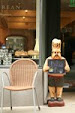
I've always been a non-group person, also known as an alone person. That means I've always shied from group things, support group, focus grups, meetings, events, etc., and I only go to photograph them now. But that also means I always looked at groups and their issues from the outside, like someone who peers over the edge of a box looking inside where everything happens.
While it's not afforded me the opportunity to be part of anything or a group, and obviously missed a lot of the inside stuff and work, it's afforded me a different perspective on those same groups and their issues and stuff. But this being outside wasn't all my doing or choice as I've found many groups are often very elistist and heirarchal, meaning new members aren't heard or seen, just there, and for the grunt work.
Well, I don't take to that attitude. I had this the time I joined the Sierra Club. I had been a member for years but decided to become an active member when they announced a weekend workshop for interested new members. Except it wasn't so much a workshop as a weekend camp of work while the team leaders and senior club members and leaders behaved like dictators.
Since I paid for the workshop I expected more than what happened. For one when I arrived I was told where I'd sleep, some old bunkhouse without rooms let alone bathrooms and what I'd be doing in the kitchen, meaning cleanup for which meals - aka, busboy, dishwasher, and dining room cleanup.
Then I was told what workshops I was eligible for as a new member, which were lead by people who told you the Club's views on issues and what you'd be doing to help the Club on those issues. And when I raised question or questioned their views on the issues, I was less than politiely told there was the Sierra Club's view (straight from SF office) expected from all members. No other view or opinion is tolerated.
Here I was with a MS degree and many years in the USGS ready to help on water resources issues and problems, and I'm told I have to start by writing letters, stuffing envelopes, and making phone calls for ballot initiatives. They simply didn't care what education, experience, skills or talents you had, you're just a body for their bidding and work. Not what I do.
Suffice it to say, I left early telling them where to stick their workshop and where to put the Sierra Club. I also left the Club at the end of the next year's membership - I didn't renew it. While they have achieved a lot for the environment in this country, I still think the Club sucks. I don't and would never recommend being a member of it.
But that's what I could do being outside looking in, to see them at face value and in the light, and then walk away shaking my head. And, as I said, I didn't get there wholly by myself. Only it started by being naive and becoming a believer in that old button, "Question Authority".
Unfortunately I learned this in the Air Force with my court martial, but that was after a previous incident. Once a year the squadron had to assemble for a full inspection, meaning the General walked through and looked at, and sometimes stopped and talked with, every member of the squadron.
After the inspection four lower grade Non-Commissioned Officers (NCO) were called to the commander's office for a talk for presentation and uniform violations. We met the commander as a group and he proceeded to exclaim what we did wrong and what reprimand would occur when I asked, "Why were there only four of us picked and not any senior NCO's who were obviously and some more so in violation?"
I was taken aside and asked about it and I explained since the senior NCO's were the one to called the troops for violations, they didn't note any of them when I saw several worse than me - sideburns, pants too short, unshined shoes, etc., within eyesight. The general wanted names which I refused to give until he promised anonimity after which I told him.
Well, that didn't sit well with the senior NCO's, because half a dozen were reprimanded and we (four) were exonerated. But the squadron first sargent was cool with it and told me thanks. But this started me on the life of that button, always question and always ask why.
And it continued through graduate school, being one of two "representatives" of the graduate students to present the Chairman and faculty of the Department with grievances (I didn't volunteer but was "elected") and into the USGS, but there I learned when I got promoted to middle management and a supervisor to pick my fights, but still, when the chips are down, always be willing to bet your career against management.
I say this because I learned if you did your homework and had support from some regional or headquarters senior staffers you could challenge local management on almost any issue and win, or at worse get a draw. I helped others' careers and work, and earned respect for being a manager who did represent and speak for the staff. But I lost recommendations for promotion for it - you need their approval and recommendation.
They didn't want me one of them at that level, being a data chief, and it pretty much sowed the seeds with my bosses (two layers up) to retire earlier than planned. But while they thought they won, they lost. They lost a great employee, dedicated believer in the USGS and its work, and passionate manager for the staff.
But I won my freedom. And even now on forums or in groups I'm still the outsider looking in and getting in trouble with others who disagree with me. They don't understand or don't want to understand opinions are just that, opinions. Everyone has one and everyone's is equal. Just don't tell them that.
Which is something I haven't learned yet and likely won't now. People hold onto their opinions so hard and tightly they can't see the truth and reality of them. They don't know to put an opinion, idea, decision, whatever, on the table for everyone to see, review and question. You never know where a better idea, more information, or something to change your mind will come from and from whom.
But if you live in a box, you'll only get the views and opinions from others in the box. Outside I can see more and see the broader life and world. While it's often lonely standing out there, outside of any box, But then I've always try to follow the advice I keep on my quotes Web page.
"Be good, be kind, be truthful, and be free."
"I know what it takes to be lonely; I know what it takes to be free."
"Knowledge is free, but you must bring your own container."
And especially the lines from the song "That's what living is to me" by Jimmy Buffett
Be good and you will be lonesome.
Be lonesome and you will be free.
Live a lie and you will live to regret it.
That's what living is to me.
Not much more to say except I'll keep on wandering outside the box.
Wednesday, October 28, 2009

Monday, October 26, 2009
Being a Data Chief
At one point in my career, mid-1990's I considered to try and be a Data Chief. This is a job where you are responsible for the operations and management of the basic data work of the Water Resources Program (WRP) for an individual state - each state being an automonous district within the WRP. It's a separate section within a district along with the respective investigations section for the scientific work of the USGS WRP in the state. And to me it was always a cool and really neat job.
Ok, you don't go into a senior district management job thinking it's cool and neat, but I loved basic data. Everything about it is interesting and all the people in the field office terrific. After 13+ years of field work in three districts (states) and then the section chief for the data management work, I knew I could be a Data Chief, which involves managing 20-40 people and a few million dollar program with two to three dozen cooperators.
It's a job where you oversee and lead the whole basic data operation for the state working with everyone from the field people to the managers with the various cooperators (government agencies, organizations, companies, etc.). You are the one that makes it all work, keeps it focused on the future, and provides the leadership to the staff. What's not to think isn't cool or neat about that?
And add the importance of the public and you get something really cool and neat. You see, the USGS WRP collects most of the water resources data in the United States, and produces and disseminates it to anyone interested. The work is paid through the contracts with the cooperators, mostly through tax dollars or water/power rates. In short, it's all paid by the citizens of this country to share with everyone.
So, I began applying for Data Chief jobs around the West or elsewhere, eight in all over a span of about three years. I got a few interviews and some recommendations from senior regional and agency folks, but wasn't the one offered the job. It turned out, not understanding politics at that level, five were predetermined for someone in the district. Of the remaining three, I was second in two.
And so after awhile and passing 50 I kinda' knew the chances of another opportunity were slim to none. In the USGS WRP you get a window of opportunity in your career and rarely once it closes it doesn't reopen. Many people had their potential careers shortened when it closed, so it wasn't new. And in pursuing my career goal I did manage to anger some folks.
You see I have a view of the job which conflicts with what most senior managers like and want in their executive staff. You see I have some basic views about being a boss/supervisor, which are:
One, it's who work for you that matters, not who you work for.
Two, you represent the (section) staff to management and not management to the staff.
Three, be a Data Chief, meaning believe in and promote data and the section to everyone, and don't be a senior district manager.
Four, be a human being, meaning be understanding and honest with people, and respect people for themselves.
Five, be yourself with management, don't play politics for the sake of management games.
I put my priorities as first, the staff (who does the work), second, the cooperators (who writes the checks), third, the public (who funds the programs) and lastly, management (who does something else).
So you can see I don't sit well with senior managers. I was passionate about basic data, from the field work and people to the production for the cooperators, the public and the reports. Everything else fits inside that, and isn't a priority over the work and the staff.
It's why I didn't get the chance to be a Data Chief. I'm not sure I would have been all that good, but it sure would have been fun to try.
Ok, you don't go into a senior district management job thinking it's cool and neat, but I loved basic data. Everything about it is interesting and all the people in the field office terrific. After 13+ years of field work in three districts (states) and then the section chief for the data management work, I knew I could be a Data Chief, which involves managing 20-40 people and a few million dollar program with two to three dozen cooperators.
It's a job where you oversee and lead the whole basic data operation for the state working with everyone from the field people to the managers with the various cooperators (government agencies, organizations, companies, etc.). You are the one that makes it all work, keeps it focused on the future, and provides the leadership to the staff. What's not to think isn't cool or neat about that?
And add the importance of the public and you get something really cool and neat. You see, the USGS WRP collects most of the water resources data in the United States, and produces and disseminates it to anyone interested. The work is paid through the contracts with the cooperators, mostly through tax dollars or water/power rates. In short, it's all paid by the citizens of this country to share with everyone.
So, I began applying for Data Chief jobs around the West or elsewhere, eight in all over a span of about three years. I got a few interviews and some recommendations from senior regional and agency folks, but wasn't the one offered the job. It turned out, not understanding politics at that level, five were predetermined for someone in the district. Of the remaining three, I was second in two.
And so after awhile and passing 50 I kinda' knew the chances of another opportunity were slim to none. In the USGS WRP you get a window of opportunity in your career and rarely once it closes it doesn't reopen. Many people had their potential careers shortened when it closed, so it wasn't new. And in pursuing my career goal I did manage to anger some folks.
You see I have a view of the job which conflicts with what most senior managers like and want in their executive staff. You see I have some basic views about being a boss/supervisor, which are:
One, it's who work for you that matters, not who you work for.
Two, you represent the (section) staff to management and not management to the staff.
Three, be a Data Chief, meaning believe in and promote data and the section to everyone, and don't be a senior district manager.
Four, be a human being, meaning be understanding and honest with people, and respect people for themselves.
Five, be yourself with management, don't play politics for the sake of management games.
I put my priorities as first, the staff (who does the work), second, the cooperators (who writes the checks), third, the public (who funds the programs) and lastly, management (who does something else).
So you can see I don't sit well with senior managers. I was passionate about basic data, from the field work and people to the production for the cooperators, the public and the reports. Everything else fits inside that, and isn't a priority over the work and the staff.
It's why I didn't get the chance to be a Data Chief. I'm not sure I would have been all that good, but it sure would have been fun to try.
The sound of rain
I've always like the sound of rain against something. It's why I live in the top floor apartment of the building, the rain against the roof. And during the summer I forget the sound until the first serious rain storms sweep through the Pacific Northwest and just rain for hours on end, only changing intensity and occasionally clearing overhead to remind us the sun is still there above all those clouds.
This last week I had to drop the van off for its annual service. Their shuttle service doesn't cross the Tacoma Narrows bridge so they drop me off at the last on/off ramp and I walk home, just about 2 miles one way, most of which is across the new bridge. The day I went to pick it up, it had rained most of the night and had lessened only slightly in the morning during the walk. But when I got to the pickup place the driver called to say he was running late, about 30-40 minutes.
So I stood there, in the rain, waiting, when the rain decided to pour down in earnest and not let up. But I wore my Northface Expedition rainsuit which I bought about 20 years ago. I had wore out my original Gore-Tex rainsuit from work which I bought in 1978 (now in the extra clothes bag in the van for emergencies). I remember paying about $750 for the Northface then because it could withstand any storm and had a lifetime guarantee.
Well, it does and I've never had to test the warranty yet. But just standing there, all dry and warm, was interesting just listening to the rain against the hood and coat. It reminded me what my boss said when I started with the USGS and came back from the first winter field trip.
I had bought myself one of those clear plastic raincoats. And on the 2nd day of the week field trip it leaked and then tore. I spent the rest of the trip in the Oregon Cascade Mountains cold and wet. When I got back and talked to the lead technician about the weather, the boss, an old crusty guy about my age now, said, "There's no excuse for being cold or wet."
Well, that day I spent $100 for a new technology Gore-Tex rainsuit. It last the five years I spent in Oregon and the five years in Arizona. It didn't survive the Washington winters so in 1988 after resealing the seams and repairing leaks every few trips, I replaced it with the Northface suit, and never got wet again.
Cold, however, is what you wear underneath it, and there are times when the cold doesn't honor clothes and just goes right through you to chill your bones. When that happens there is nothing you can do to in the field except work fast. But mostly the Northface was a champ holding in heat too.
What I also learned years later about my boss is that he could say that because he rarely did his field trip in the rain, and never in the cold. He had the easiest field trip and always tried to go when the weather was warm and clear. He always found excuses for worst weather, and only went we had to measure floods, but even then he often sent us as he had to "man the office" during the events.
Yeah, right. Anyway, I remember doing many field trips for the week in the rain. I grew to hate it sometimes because you were always in it and you had to write which meant my hands were always cold and wet even with fingerless gloves. It eventually lead to the onset of Raynaud's Syndrome and getting out of field work in 1991 when another job opened in the office.
I still continued to hike and bike in the rain, but then slowly faded out those trips to Mt. Rainier NP when I spent a hiking trip in the rain and got tired of everything being wet all the time. I eventually just hiked out and went home. Rain now is something I like to pick when I go out in it and how long I stay.
I also continue to run in the rain, and in fact love it more than when it's not raining. Rain forces you to focus on the run and mostly the road and trail. Since the runs are shorter these years (30-40 minutes tops), I don't really get very wet with a good rain/wind shell and pants, and know home is always at the end of the run.
But sometimes, though, it's just nice to stand there letting it fall on and all around you, just to listen and feel it. And remember.
This last week I had to drop the van off for its annual service. Their shuttle service doesn't cross the Tacoma Narrows bridge so they drop me off at the last on/off ramp and I walk home, just about 2 miles one way, most of which is across the new bridge. The day I went to pick it up, it had rained most of the night and had lessened only slightly in the morning during the walk. But when I got to the pickup place the driver called to say he was running late, about 30-40 minutes.
So I stood there, in the rain, waiting, when the rain decided to pour down in earnest and not let up. But I wore my Northface Expedition rainsuit which I bought about 20 years ago. I had wore out my original Gore-Tex rainsuit from work which I bought in 1978 (now in the extra clothes bag in the van for emergencies). I remember paying about $750 for the Northface then because it could withstand any storm and had a lifetime guarantee.
Well, it does and I've never had to test the warranty yet. But just standing there, all dry and warm, was interesting just listening to the rain against the hood and coat. It reminded me what my boss said when I started with the USGS and came back from the first winter field trip.
I had bought myself one of those clear plastic raincoats. And on the 2nd day of the week field trip it leaked and then tore. I spent the rest of the trip in the Oregon Cascade Mountains cold and wet. When I got back and talked to the lead technician about the weather, the boss, an old crusty guy about my age now, said, "There's no excuse for being cold or wet."
Well, that day I spent $100 for a new technology Gore-Tex rainsuit. It last the five years I spent in Oregon and the five years in Arizona. It didn't survive the Washington winters so in 1988 after resealing the seams and repairing leaks every few trips, I replaced it with the Northface suit, and never got wet again.
Cold, however, is what you wear underneath it, and there are times when the cold doesn't honor clothes and just goes right through you to chill your bones. When that happens there is nothing you can do to in the field except work fast. But mostly the Northface was a champ holding in heat too.
What I also learned years later about my boss is that he could say that because he rarely did his field trip in the rain, and never in the cold. He had the easiest field trip and always tried to go when the weather was warm and clear. He always found excuses for worst weather, and only went we had to measure floods, but even then he often sent us as he had to "man the office" during the events.
Yeah, right. Anyway, I remember doing many field trips for the week in the rain. I grew to hate it sometimes because you were always in it and you had to write which meant my hands were always cold and wet even with fingerless gloves. It eventually lead to the onset of Raynaud's Syndrome and getting out of field work in 1991 when another job opened in the office.
I still continued to hike and bike in the rain, but then slowly faded out those trips to Mt. Rainier NP when I spent a hiking trip in the rain and got tired of everything being wet all the time. I eventually just hiked out and went home. Rain now is something I like to pick when I go out in it and how long I stay.
I also continue to run in the rain, and in fact love it more than when it's not raining. Rain forces you to focus on the run and mostly the road and trail. Since the runs are shorter these years (30-40 minutes tops), I don't really get very wet with a good rain/wind shell and pants, and know home is always at the end of the run.
But sometimes, though, it's just nice to stand there letting it fall on and all around you, just to listen and feel it. And remember.
Wednesday, September 16, 2009
Being 60
Yes, this month I turned 60. I don't feel 60, or at least it's a feeling somedays but not others which more often feels like 60. It's the thoughts and feelings from my youth and the thoughts and feelings of being older. It's about growing old than getting old. And it's about fighting an aging body and increasing depression.
In other words, it's the normal stuff of approaching age. I'm no different. I hate growing old and I have to keep fighting getting old. It's just so easy to quit and let time do what it does to everyone, and we become curmudgeon in our own body and mind, whether we know it or not or whether others see it and tell us or not. It's the entopy of being human, we get smaller and narrower of mind and body.
And often it seems and feels like fighting entropy is the biggest problem than anything else. Not working on the photo guide or the history projects, or getting my ass out the door to do some photography, or worse getting my ass out the door to run or jog/walk. It's often easier on days like today to take a nap and let everything else go and go by.
After all it's a wonderful fall (ok, technically late summer) day. Nice blue sky with high cirrus clouds (but aren't cirrus clouds high by definition?) and cool temperatures with a slight breeze, just enough to tickle the bamboo chimes to produce gentle notes and silence. Open all the doors and windows. Let the breeze and cool air fill the rooms. Just plant the butt and close the eyes.
Put the todo list aside. Let the list of places to go, things to buy, errands to runs sit. Just lie down and relax. The rest of the world will still be there later. The day won't feel any different, just later and older. The entropy will continue to expand with the universe. Everyone else will still be busy with their life. Nothing will have been accomplished but sometimes it's the only thing that matters.
Just the passage of time feeling good.
I live along the Narrows Strait across the now twin Narrows Bridge(s) and opposite Tacoma. I overlook the strait with the trains running by on the other side of the strait, the boats and ships going through the Narrows, and the planes flying in and out of SeaTac airport and McChord AFB. And in the far distance Mt. Rainier stand majestic as every, at least when it's not shrounded in clouds or we're all shrouded in rain and/or snow.
This means throughout the day, besides the sound of the weather and the trees, there are the sounds of the trains, ships and planes. The sounds of the world and like Paul Simon said, "Everyone loves the sound of the train in the distance." And close by the sounds of the neighborhood, kids, cars, dogs and whatever else goes through or by. And every now and then, silence. Nothing.
I've always liked living here. For that alone. And for the place I live, a lot like me, old and worn but surviving enough to get by. And turning 60, it's all the more sweet and important. If I want the noise of the city, I've several a few miles to an hour drive away across the bridge or on the ferry. If I want the peace of the wilderness, an hour-plus drive I'm in Mt. Rainier NP, or the Olympic NP, or the Cascade Mountains.
I've always been struck with the saying, "Stand in your own space and know you are there." And sometimes it's become more important every day. For in the end, it's all you have, what you are then and there. Everything else is what you leave, the stuff of your life and career and the love you leave in the heart's of others.
I'm not really sure what that's means in an ordinary life. I remember when working with the USGS I used to look back at the history of some of the gages, which go back to the late 1890's in Washington State. The USGS keeps all the papers for a gage in one place in file cabinets. It's all there, and it was a great way to waste an afternoon walking through the history from the original letters and permits to every discharge measurement ever taken.
And then knowing what I had done in my 28 years is now there with all the others. One among the many. And all the work filed with the rest, archived in a warehouse somewhere, lost again until someone opens the box, picks up the file and reads the history. All the past hydrologists who left their work. Thanks USGS, it was fun, well most of the time, and rewarding beyond what I imagined when I started.
After that, all my life has been pretty ordinary, like the billions who have already been here and the billions who are already here. My thankful I made it this far, my brother didn't. My Dad did but most of his life after 60 wasn't much of one with all his phsical problems. He mostly just puttered his life away for 15 more years.
After he passed away, Mom told me, "Whatever you do with the rest of your life, don't be like your father." She then told me when he retired he simply faded into nothingness, leaving nothing for the time and only taking up time and space. She said, "Go do something you love and don't stop until you die."
Advice we've all heard, but how many of us actually heed it? And by the time you're 60, did you follow it? Do you plan to follow it? Do you realize it sneaks up on you? Being 60 that is. One day you're young, then birthdays seem to go by and then you're looking at 60 on the calendar. And you sit down and wonder about your life and wander back through your life.
Do the good outweigh the bad? Does the did something outweigh the I had plans? Did the right choices outweigh the regrets? And the most obvious one to many, do you still like yourself? Are you comfortable being yourself at 60?
I ask these because being here I can. I can't answer for me yet, I'm still wondering and wandering. I probably won't know even in the future. Hindsight isn't my speciality and more often than not, not my interest. Just waking up some days is important enough, and doing what I would like, planned or have to is often what happens.
And so, it's the ramblings of an old(er) person, and like our minds, often fuzzy and ambiguous. A lot like life, ill defined and uncertain, to which I'll ponder and write more of the next year, like cresting the hill and standing on the divide between then and there. Youth and old age. Gone and ahead. Been and going. Done and will. And so on.
In other words, it's the normal stuff of approaching age. I'm no different. I hate growing old and I have to keep fighting getting old. It's just so easy to quit and let time do what it does to everyone, and we become curmudgeon in our own body and mind, whether we know it or not or whether others see it and tell us or not. It's the entopy of being human, we get smaller and narrower of mind and body.
And often it seems and feels like fighting entropy is the biggest problem than anything else. Not working on the photo guide or the history projects, or getting my ass out the door to do some photography, or worse getting my ass out the door to run or jog/walk. It's often easier on days like today to take a nap and let everything else go and go by.
After all it's a wonderful fall (ok, technically late summer) day. Nice blue sky with high cirrus clouds (but aren't cirrus clouds high by definition?) and cool temperatures with a slight breeze, just enough to tickle the bamboo chimes to produce gentle notes and silence. Open all the doors and windows. Let the breeze and cool air fill the rooms. Just plant the butt and close the eyes.
Put the todo list aside. Let the list of places to go, things to buy, errands to runs sit. Just lie down and relax. The rest of the world will still be there later. The day won't feel any different, just later and older. The entropy will continue to expand with the universe. Everyone else will still be busy with their life. Nothing will have been accomplished but sometimes it's the only thing that matters.
Just the passage of time feeling good.
I live along the Narrows Strait across the now twin Narrows Bridge(s) and opposite Tacoma. I overlook the strait with the trains running by on the other side of the strait, the boats and ships going through the Narrows, and the planes flying in and out of SeaTac airport and McChord AFB. And in the far distance Mt. Rainier stand majestic as every, at least when it's not shrounded in clouds or we're all shrouded in rain and/or snow.
This means throughout the day, besides the sound of the weather and the trees, there are the sounds of the trains, ships and planes. The sounds of the world and like Paul Simon said, "Everyone loves the sound of the train in the distance." And close by the sounds of the neighborhood, kids, cars, dogs and whatever else goes through or by. And every now and then, silence. Nothing.
I've always liked living here. For that alone. And for the place I live, a lot like me, old and worn but surviving enough to get by. And turning 60, it's all the more sweet and important. If I want the noise of the city, I've several a few miles to an hour drive away across the bridge or on the ferry. If I want the peace of the wilderness, an hour-plus drive I'm in Mt. Rainier NP, or the Olympic NP, or the Cascade Mountains.
I've always been struck with the saying, "Stand in your own space and know you are there." And sometimes it's become more important every day. For in the end, it's all you have, what you are then and there. Everything else is what you leave, the stuff of your life and career and the love you leave in the heart's of others.
I'm not really sure what that's means in an ordinary life. I remember when working with the USGS I used to look back at the history of some of the gages, which go back to the late 1890's in Washington State. The USGS keeps all the papers for a gage in one place in file cabinets. It's all there, and it was a great way to waste an afternoon walking through the history from the original letters and permits to every discharge measurement ever taken.
And then knowing what I had done in my 28 years is now there with all the others. One among the many. And all the work filed with the rest, archived in a warehouse somewhere, lost again until someone opens the box, picks up the file and reads the history. All the past hydrologists who left their work. Thanks USGS, it was fun, well most of the time, and rewarding beyond what I imagined when I started.
After that, all my life has been pretty ordinary, like the billions who have already been here and the billions who are already here. My thankful I made it this far, my brother didn't. My Dad did but most of his life after 60 wasn't much of one with all his phsical problems. He mostly just puttered his life away for 15 more years.
After he passed away, Mom told me, "Whatever you do with the rest of your life, don't be like your father." She then told me when he retired he simply faded into nothingness, leaving nothing for the time and only taking up time and space. She said, "Go do something you love and don't stop until you die."
Advice we've all heard, but how many of us actually heed it? And by the time you're 60, did you follow it? Do you plan to follow it? Do you realize it sneaks up on you? Being 60 that is. One day you're young, then birthdays seem to go by and then you're looking at 60 on the calendar. And you sit down and wonder about your life and wander back through your life.
Do the good outweigh the bad? Does the did something outweigh the I had plans? Did the right choices outweigh the regrets? And the most obvious one to many, do you still like yourself? Are you comfortable being yourself at 60?
I ask these because being here I can. I can't answer for me yet, I'm still wondering and wandering. I probably won't know even in the future. Hindsight isn't my speciality and more often than not, not my interest. Just waking up some days is important enough, and doing what I would like, planned or have to is often what happens.
And so, it's the ramblings of an old(er) person, and like our minds, often fuzzy and ambiguous. A lot like life, ill defined and uncertain, to which I'll ponder and write more of the next year, like cresting the hill and standing on the divide between then and there. Youth and old age. Gone and ahead. Been and going. Done and will. And so on.
Tuesday, September 1, 2009
No Sympathy here
Sunday (August 30, 2009) I read the story in the New York Times, "A Life Story in Need of a Rewrite", found here. I'm not sorry to say this person gets no empathy and no sympathy from me. Harsh, maybe. Cruel, not. Because it's the old adage, he made his bed (life) and now he has to lie it (live with it).
As I'm learning now having to write a six in front of digits for my age, while I harbor regrets and other emotions about my life and past, I fully realize it's done and can't be changed. It is what was and what happened, and like it or not, it's there, whether in my memory or that of others. I can apologize about my mistakes and forgive others for theirs, it still doesn't change the original and lingering emotions and feelings, mine or theirs.
But to imply some sense of empathy or sympathy for a man who anyone would consider modestly weathly with a good paying job, sorry not here. When he made 3-4 times the median family income in the US, there isn't much to think about. And now he's been out of a job for 18 months. Like the rest of the unemployed should shoulder his anger or whatever he's feeling?
I won't argue, he and his life needs a rewrite, and he has to reinvent himself. But who hasn't? I'm still doing that nearly 4 years after I retired early (long story about bosses and staff reductions). I saw my new life long before I retired, the ideas of what I wanted to do and I planned the finances, or as best I could, a few years before walking away (not long enough, but good enough).
It's been hard work and more than I had envisioned. It's had it's ups and downs and will have more ups and downs, partly do to my own genetic and lifelong Dysthymia. That's more the battle than the things and events in life, but then they go hand in hand too. What I have learned though, is that there is always more to do and even more than I can imagine doing.
A rewrite? I don't know what that is except to keep rolling on with what I love to do, and find ways to keep it going. And you can bet above all, I can stand on my deck knowing fully what I've done and have, and knowing I'm grateful for my reality and being. I'm not broke or poor. Money is an issue but not the day to day stuff of life. In short, I'm modestly independent to be free enough to enjoy where and what I am.
So, no, I have no sympathy for someone who has had a better life than me and faces similar hardships as I've felt. As I don't expect it from others of me. Quite the opposite, I respect those working harder with less, circumstances in life wasn't necessarily as kind to them as me. But the guy in the article? Sorry, not much to say except keep going and you never know.
And at the end of the piece, he seems to have some clues and insight. What else is there?
As I'm learning now having to write a six in front of digits for my age, while I harbor regrets and other emotions about my life and past, I fully realize it's done and can't be changed. It is what was and what happened, and like it or not, it's there, whether in my memory or that of others. I can apologize about my mistakes and forgive others for theirs, it still doesn't change the original and lingering emotions and feelings, mine or theirs.
But to imply some sense of empathy or sympathy for a man who anyone would consider modestly weathly with a good paying job, sorry not here. When he made 3-4 times the median family income in the US, there isn't much to think about. And now he's been out of a job for 18 months. Like the rest of the unemployed should shoulder his anger or whatever he's feeling?
I won't argue, he and his life needs a rewrite, and he has to reinvent himself. But who hasn't? I'm still doing that nearly 4 years after I retired early (long story about bosses and staff reductions). I saw my new life long before I retired, the ideas of what I wanted to do and I planned the finances, or as best I could, a few years before walking away (not long enough, but good enough).
It's been hard work and more than I had envisioned. It's had it's ups and downs and will have more ups and downs, partly do to my own genetic and lifelong Dysthymia. That's more the battle than the things and events in life, but then they go hand in hand too. What I have learned though, is that there is always more to do and even more than I can imagine doing.
A rewrite? I don't know what that is except to keep rolling on with what I love to do, and find ways to keep it going. And you can bet above all, I can stand on my deck knowing fully what I've done and have, and knowing I'm grateful for my reality and being. I'm not broke or poor. Money is an issue but not the day to day stuff of life. In short, I'm modestly independent to be free enough to enjoy where and what I am.
So, no, I have no sympathy for someone who has had a better life than me and faces similar hardships as I've felt. As I don't expect it from others of me. Quite the opposite, I respect those working harder with less, circumstances in life wasn't necessarily as kind to them as me. But the guy in the article? Sorry, not much to say except keep going and you never know.
And at the end of the piece, he seems to have some clues and insight. What else is there?
Subscribe to:
Posts (Atom)