I've always, like we all do, searching for the word(s) that describes me. It's the old question after we meet someone for the first time, "So, what do you do?" And we try to answer with short, cryptic words which summarizes our work to date. Like it really means anything?
For instance, I've always considered myself a geographer by education and a hydrologist by work, but it's really more than that. I'm innately a geographer. I'm a visual person, but more so, I see almost everything in terms of images and places. I see everywhere I go, not just seeing but remembering. I don't navigate by directions unless it's a place I've never been. I always navigate by scenes and places.
Geography is interwoven into my being, it's really that simple. And I'm a hydrologist by my career, but it's also more than that. I love rivers. Yes, I like being there and trying to understand them. But it's the flow of water that takes a whole new meaning to me. As a Taoist. It's a metaphysical thing. Rivers are just cool for themselves, and in and of themselves, and everything about them.
The whole dynamics of a river, the water, the landscape, the river course, the energy, and on and on. It's a Taoist experience. And that's interwoven in my mind.
But then I've always called myself a nature/landscape and street photographer, but that really not it. It was a handy description to use with people because they have an idea what and who that is. But then I found a term which fits the best. You know when something, like a word or a decision fits best when it both feels and thinks right?
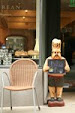
And that is something Kent Budge uses. I'm an observational photographer. I take pictures of what I see. I try to capture and present that, what I saw. Nothing more and nothing less. Just what my photo-mind saw at that instant and decided to capture in the camera.
Almost all my street photographs are taken at eye level, looking in whatever direction I point the camera. The same is true of my nature and landscape photography, most are at eye level. I don't usually try to squat down or stretch up for a shot. I just see, capture and move on. Only occasionally will I spend more time looking for different angles or views, but almost always still photograph at eye level.
So, that's the best word I've found to date, I'm an observational photographer.
Thursday, October 23, 2008

Tuesday, October 21, 2008
Ten years later
When I was 49, shortly after my birthday, I was in the best physical shape I had been in since my military days. I'm not much of an exercise person per se, just enough to stay fit. Partly because I discovered I don't have fast twitch muscles to build strength and my metabolism doesn't allow prolonged activity such as running or hiking. At 49 I peaked at running 4-5 miles 3-4 days a week with once a week weight training.
And then the proverbial bottom fell out at work, they added additional work on unrealistic deadline, and my fitness fell along with it. I ended up in six months later 20 pounds heavier losing all the fitness I had spent the previous 3 years working hard to achieve. By my 50th birthday I was back to about half the running and nearly the same weight training, but not the same anymore.
At that time I made the promise to get better every year and evaluate my progress every birthday, and see if I can get back to the same level of fitness (and health associated with that fitness) as I was at 49. And you can guess the results, and while I found I didn't gain much ground I didn't lose ground either. I was ever so slowly getting better.
Until my 57th birthday when I started losing. And now at my 59th birthday? Well, I didn't lose but I haven't gained either.
I remember reading a story with Alan Page, one of the famous Minnesota Vikings defensive players during their heyday. He said he quit football in his 40's when he discovered it took more energy and time to keep the same level of strength and fitness the year before. And experts have said after 50 the best you can do is slow the decline of your body, fitness and health.
And so for my 59th birthday I'm trying to make the promise I made at 49, to be better by my next (now 60th) birthday and ever so slowly get better, or at least not get worse. Or so that's the new plan. I have no ideas anymore if that is realistic, let alone possible, but considering the alternative, it's better than them.
As for progress, I'll keep you posted.
And then the proverbial bottom fell out at work, they added additional work on unrealistic deadline, and my fitness fell along with it. I ended up in six months later 20 pounds heavier losing all the fitness I had spent the previous 3 years working hard to achieve. By my 50th birthday I was back to about half the running and nearly the same weight training, but not the same anymore.
At that time I made the promise to get better every year and evaluate my progress every birthday, and see if I can get back to the same level of fitness (and health associated with that fitness) as I was at 49. And you can guess the results, and while I found I didn't gain much ground I didn't lose ground either. I was ever so slowly getting better.
Until my 57th birthday when I started losing. And now at my 59th birthday? Well, I didn't lose but I haven't gained either.
I remember reading a story with Alan Page, one of the famous Minnesota Vikings defensive players during their heyday. He said he quit football in his 40's when he discovered it took more energy and time to keep the same level of strength and fitness the year before. And experts have said after 50 the best you can do is slow the decline of your body, fitness and health.
And so for my 59th birthday I'm trying to make the promise I made at 49, to be better by my next (now 60th) birthday and ever so slowly get better, or at least not get worse. Or so that's the new plan. I have no ideas anymore if that is realistic, let alone possible, but considering the alternative, it's better than them.
As for progress, I'll keep you posted.
Tuesday, August 5, 2008
Stay warm and dry
I joined the USGS August 14, 1978 with the Eugene, Oregon office. I spent the Friday before starting the following Monday in the Portland, Oregon office with the personnel specialist becoming a USGS employee and civil servant with the US federal government. I was then a "civil servant" and relished in the role representing the public in my job and work with the USGS. Linda and I went back to Eugene where we found a house to rent to get ready for Monday.
My first few days with the office was sitting at a desk, getting organized - meaning getting my own streamgaging equipment tested and ready, reading manuals and becoming familar with the place and people. I spent most of the first month on field trips with the three other field people learning the basics of stream gaging and producing the data (called records then). I learned three different ways to service gages and making discharge measurements.
I wasn't until the late fall where I got my own field trip (Willamette River trip from Eugene to the headwaters in the central Cascade Mountains) after going on the trip with the lead technician to learn the gages and work. And it wasn't until the winter when I got my first real experience streamgaging in cold, rainy weather. But Linda helped getting what she thought was a good rainsuit. And I thought too.
Well, my first field trip entirely in the rain was interesting. I hate being wet. I don't know why, some childhood trauma or some such thing, but I hate being wet. Anyway, but Friday afternoon the raincoat was shredded. The seams tore and leaked and the pant ripped. The whole rainsuit was junk, plain and simple, and after the last gage on Friday I was thoroughly wet. I drove back to the office and put the stuff on my desk, and said I would clean out my truck Monday.
But just after bitching about my rainsuit, and Mikey (lead technician) listened with a smile of knowledge and experience ("Been there, done that."), the boss walked up to me and in a callous tone said, "There is no excuse for being wet or cold.", and walked out the door to go home. That pissed me off.
So, the next day I went to an outdoor recreation store in Eugene and bought a new (then) technology Gore-Tex rainsuit for $100 (remember it's 1978 prices). It was plain and simple. No pockets, minimal seams (sealed), and totally rainproof. I also bought some good wool blend long underwear and an English wool fisherman's sweater.
I spent the next years in the field with the Eugene office being warm and dry, and only my hands got wet. I have never regretted the money spent then, and all of the clothes are still in use. The sweater still fits and works great. The underwear has been replaced with synthetic wool-blend ones but I still wear them in very cold weather. And the rainsuit?
Well, its survived through the four years in Oregon and five years in Arizona before the seams leaked after washing and resealing and the Gore-Tex began delayering (bubbles) on the inside. But it's sits in the emergency clothing back in the Van to use if and when it's needed. It still does a great job except in downpours and long periods of rain. For that I upgraded to a new rainsuit.
In 1988 I bought a North Face Expedition Rainsuit at their store in Seattle ($750 in 1988 prices). It has a lifetime warranty and has done weeks on end in the rain and cold and I'm always warm and dry. I couldn't be happier with it. It doesn't work well in warmer rainy weather but I have other raincoats for those period, but once it's below 50 degrees, and especially below 40 degrees, it's a godsend.
And so my advice to anyone who works or wants to be outdoors is the same, "Stay warm and dry." And I am quite comfortable and warm no matter the rain.
My first few days with the office was sitting at a desk, getting organized - meaning getting my own streamgaging equipment tested and ready, reading manuals and becoming familar with the place and people. I spent most of the first month on field trips with the three other field people learning the basics of stream gaging and producing the data (called records then). I learned three different ways to service gages and making discharge measurements.
I wasn't until the late fall where I got my own field trip (Willamette River trip from Eugene to the headwaters in the central Cascade Mountains) after going on the trip with the lead technician to learn the gages and work. And it wasn't until the winter when I got my first real experience streamgaging in cold, rainy weather. But Linda helped getting what she thought was a good rainsuit. And I thought too.
Well, my first field trip entirely in the rain was interesting. I hate being wet. I don't know why, some childhood trauma or some such thing, but I hate being wet. Anyway, but Friday afternoon the raincoat was shredded. The seams tore and leaked and the pant ripped. The whole rainsuit was junk, plain and simple, and after the last gage on Friday I was thoroughly wet. I drove back to the office and put the stuff on my desk, and said I would clean out my truck Monday.
But just after bitching about my rainsuit, and Mikey (lead technician) listened with a smile of knowledge and experience ("Been there, done that."), the boss walked up to me and in a callous tone said, "There is no excuse for being wet or cold.", and walked out the door to go home. That pissed me off.
So, the next day I went to an outdoor recreation store in Eugene and bought a new (then) technology Gore-Tex rainsuit for $100 (remember it's 1978 prices). It was plain and simple. No pockets, minimal seams (sealed), and totally rainproof. I also bought some good wool blend long underwear and an English wool fisherman's sweater.
I spent the next years in the field with the Eugene office being warm and dry, and only my hands got wet. I have never regretted the money spent then, and all of the clothes are still in use. The sweater still fits and works great. The underwear has been replaced with synthetic wool-blend ones but I still wear them in very cold weather. And the rainsuit?
Well, its survived through the four years in Oregon and five years in Arizona before the seams leaked after washing and resealing and the Gore-Tex began delayering (bubbles) on the inside. But it's sits in the emergency clothing back in the Van to use if and when it's needed. It still does a great job except in downpours and long periods of rain. For that I upgraded to a new rainsuit.
In 1988 I bought a North Face Expedition Rainsuit at their store in Seattle ($750 in 1988 prices). It has a lifetime warranty and has done weeks on end in the rain and cold and I'm always warm and dry. I couldn't be happier with it. It doesn't work well in warmer rainy weather but I have other raincoats for those period, but once it's below 50 degrees, and especially below 40 degrees, it's a godsend.
And so my advice to anyone who works or wants to be outdoors is the same, "Stay warm and dry." And I am quite comfortable and warm no matter the rain.
Wednesday, July 2, 2008
My Thesis
I was wandering around the Internet the other day and found the the on-line listing of my Master's Degree thesis in the catagory of the library at Western Washington University in Bellingham, Washington. My sole claiim to academic fame, well outside, of the one study I've had published, which was an article for "Shore and Beach" professional journal in graduate school for a professor researching coastal erosion.
Both were interesting to do, but the thesis was the second attempt at one. I actually left the university in 1978 to start my career with the USGS in Eugene, Oregon. Since my first thesis topic, the perception of floods and flood hazards in the Skagit River valley, Washington, imploded, with well over half of it done - long story about doing survery in small populations where you need a high level of cooperation and participation, I bagged the whole idea until a few years later.
When I went through college after the service (USAF 1969-73), I started with a local community college (American River College) and found a terrific instructor, Bob Christopherson, who went on to write a series of "Geosystems" text books, and travels, lectures and other publications after his retirement from ARC. And I found what I like to know more than anything, geography.
After getting my basic course and introductory geography courses done, with a few not so great grades in classes I didn't care much for, after all it was the early 1970's and I was young, married and working - ok, nice excuse but the stuff was boring and I wanted to learn other things, I transferred to California State University Sacramento. For all of $100 per quarter plus books I got a BA degree in Geography and got accepted to Western's Geography Department.
On the way to Bellingham, being December 1975 when it was under a 100-year flood, we crossed the Skagit River valley and I was enthralled and amazed at the place, the sheer extent of flooding and flood damage. I wondered how in the world could people not see the potential destruction and the reality of floods. I decided then and there that was my thesis topic, and everything else was secondary.
Nice concept, and it almost worked. I spent my independent study credits to do the background research and get the thesis framework done. I used the coastal erosion study to research and learn natural hazard perception study pioneered by Gilbert White at the University of Chicago Geography Department. When I had finished the formal coursework I had two of the three chapters for the thesis done.
I only needed to get the result of the surverys. I had surveyed three communities in the upper Skagit River valley, Concrete, Hamilton and Lyman, all in the floodplain and severely flooded in the December 1975 flood. Each had about 50 houses, so I needed 30-40 respondents from each town. That was the plan. I got about ten from each, even after followup contacts to help get responses.
I later learned from some people that while there were the best places for the study I simply picked towns with people who hated government and/or anyone like me who wanted them to fill out a survey or respond personally to someone. Several professors said I had the perfect case study, one suggested making it PhD dissertation since I was pushing the envelope of the technique and application.
I just wanted people to fill out my survey or answer them in person. I and the thesis was stuck and I needed a job. Anyway, two months later the USGS called with a job offer which I accepted to start in Eugene, Oregon office.
When I was (forced) transferred to Phoenix, Arizona, meaning move or be fired (long story about management ineptness and dumbness) I decided to get a conversion from being a hydrologic technician to a professional hydrologist. Why? Money, pure and simple. I wanted to get to a GS-12 and higher if possible to retire before 60 with a good annuity. That was the plan and as that plans needed, I needed the MS degree to get the conversion and promotions.
And so reviewing the old thesis I discovered it wasn't worth the time and travel, so I found a new one. Bob Hirsch, currently Associate Director for Water Programs but then a research hydrologist had developed a statistical technique to assess water quality data over time. They applied this to the NASQAN program data being collected at several hundred stream gages around the country.
Their results determined that some basins didn't have any significant or even discernible trend, two of which were on the Oregon coast where I was one of the two technicians who collected the data over the years of the data. I wanted to know why there wasn't a trend in the data. So I found Hirsch's study and report he developed with Jim Slack.
And yes, I discovered why, which wasn't the fault of the data so much as the timing of the data collection and flow for the period of data collection. But I also discovered the coastal rivers were unique in that the water quality was unusually low in major constituents with significant contributions from precipitatioin and that the water in the groundwater system has a short residence time, meaning from precipitatiion to streamflow was measured in a months than the normal years.
When I reported the results of my research which showed we (USGS) needed better ways to monitor the timing of routine water quality data collection, I was ignored. The problem is that consistently timed samples are the best for time trend studies but not good for representing flow, and samples collected for representing flow don't do well for trend studies. The answer was a combination where you sample for flow within time windows.
But this isn't what management wanted to hear. They liked work scheduled, and let the rest take care of itself. That, however, misses the importance and power of the data to be useful for additional analysis of other factors besides just time. It's sometimes more important to have the data represent the basin characteristics other than time, such as flow, events, surface/groundwater contributions, etc. Or so I thought but they didn't.
Anyway, I think it's funny that something I did over 20 years ago has come back to find me, or I found it. And sorry, it's a very dull read, so don't waste your time.
Both were interesting to do, but the thesis was the second attempt at one. I actually left the university in 1978 to start my career with the USGS in Eugene, Oregon. Since my first thesis topic, the perception of floods and flood hazards in the Skagit River valley, Washington, imploded, with well over half of it done - long story about doing survery in small populations where you need a high level of cooperation and participation, I bagged the whole idea until a few years later.
When I went through college after the service (USAF 1969-73), I started with a local community college (American River College) and found a terrific instructor, Bob Christopherson, who went on to write a series of "Geosystems" text books, and travels, lectures and other publications after his retirement from ARC. And I found what I like to know more than anything, geography.
After getting my basic course and introductory geography courses done, with a few not so great grades in classes I didn't care much for, after all it was the early 1970's and I was young, married and working - ok, nice excuse but the stuff was boring and I wanted to learn other things, I transferred to California State University Sacramento. For all of $100 per quarter plus books I got a BA degree in Geography and got accepted to Western's Geography Department.
On the way to Bellingham, being December 1975 when it was under a 100-year flood, we crossed the Skagit River valley and I was enthralled and amazed at the place, the sheer extent of flooding and flood damage. I wondered how in the world could people not see the potential destruction and the reality of floods. I decided then and there that was my thesis topic, and everything else was secondary.
Nice concept, and it almost worked. I spent my independent study credits to do the background research and get the thesis framework done. I used the coastal erosion study to research and learn natural hazard perception study pioneered by Gilbert White at the University of Chicago Geography Department. When I had finished the formal coursework I had two of the three chapters for the thesis done.
I only needed to get the result of the surverys. I had surveyed three communities in the upper Skagit River valley, Concrete, Hamilton and Lyman, all in the floodplain and severely flooded in the December 1975 flood. Each had about 50 houses, so I needed 30-40 respondents from each town. That was the plan. I got about ten from each, even after followup contacts to help get responses.
I later learned from some people that while there were the best places for the study I simply picked towns with people who hated government and/or anyone like me who wanted them to fill out a survey or respond personally to someone. Several professors said I had the perfect case study, one suggested making it PhD dissertation since I was pushing the envelope of the technique and application.
I just wanted people to fill out my survey or answer them in person. I and the thesis was stuck and I needed a job. Anyway, two months later the USGS called with a job offer which I accepted to start in Eugene, Oregon office.
When I was (forced) transferred to Phoenix, Arizona, meaning move or be fired (long story about management ineptness and dumbness) I decided to get a conversion from being a hydrologic technician to a professional hydrologist. Why? Money, pure and simple. I wanted to get to a GS-12 and higher if possible to retire before 60 with a good annuity. That was the plan and as that plans needed, I needed the MS degree to get the conversion and promotions.
And so reviewing the old thesis I discovered it wasn't worth the time and travel, so I found a new one. Bob Hirsch, currently Associate Director for Water Programs but then a research hydrologist had developed a statistical technique to assess water quality data over time. They applied this to the NASQAN program data being collected at several hundred stream gages around the country.
Their results determined that some basins didn't have any significant or even discernible trend, two of which were on the Oregon coast where I was one of the two technicians who collected the data over the years of the data. I wanted to know why there wasn't a trend in the data. So I found Hirsch's study and report he developed with Jim Slack.
And yes, I discovered why, which wasn't the fault of the data so much as the timing of the data collection and flow for the period of data collection. But I also discovered the coastal rivers were unique in that the water quality was unusually low in major constituents with significant contributions from precipitatioin and that the water in the groundwater system has a short residence time, meaning from precipitatiion to streamflow was measured in a months than the normal years.
When I reported the results of my research which showed we (USGS) needed better ways to monitor the timing of routine water quality data collection, I was ignored. The problem is that consistently timed samples are the best for time trend studies but not good for representing flow, and samples collected for representing flow don't do well for trend studies. The answer was a combination where you sample for flow within time windows.
But this isn't what management wanted to hear. They liked work scheduled, and let the rest take care of itself. That, however, misses the importance and power of the data to be useful for additional analysis of other factors besides just time. It's sometimes more important to have the data represent the basin characteristics other than time, such as flow, events, surface/groundwater contributions, etc. Or so I thought but they didn't.
Anyway, I think it's funny that something I did over 20 years ago has come back to find me, or I found it. And sorry, it's a very dull read, so don't waste your time.
Saturday, June 14, 2008
My Father
Father's Day is this weekend. My father died November 8, 1994, just two days past his 75th birthday. In his later years of life, after a quintuple heart bypass, which the cardiologist said would only extend his life a year, two at most, he set three goals in his life, to pay off the 30-year mortage to his home in Aurora, Colorado, the first and only home my parents every bought and then owned, to celebrate the 50th anniversary with my Mom, and to see his 75th birthday.
And the morning after this birthday, he didn't get out of bed. He fell into a semi-conscious state and died the next day. He didn't recognize anyone around him and he kept having conversations with people long dead. My sister and brother's children were there and try as they may to say goodbye to their grandfather, he didn't even recognize them. My Mom was saddened that he, the man she spent over 50 years with, didn't even recognize her. I doubt she ever got over it, until she died in 2006.
So what can I say about Father's Day? Not much because I was estranged from Dad and he was enstranged from us kids. He kept to himself for the entire time we grew up. He was an Air Force officer with a career goal in mind, which I suspect he didn't quite get there, retiring one rank lower than he wanted, as is the politics in the military. When we were in Mountain Home AFB, Idaho, he wanted to be a full colonel, but that wasn't in their plans.
So he agreed to transfer to Germany, get the promotion to lieutenant colonel, and retire with 23+ years. I can't argue with the time we had there, it was great for a kid to live there in the early 1960's. And while he made time for some events in our lives, he mostly spent the time working. I can only really thank him for the trips to auto races in Germany and France, seeing international Formula and sports car races and some of the greatest drivers in the world.
It was at one of those races I pretty much lost any interest my Dad had in me, and really more of anger and maybe even hate. It's a long story but my brother and I were horsing around and caused a pot of hot water to spill into his lap as he was making dinner for us on the last night there. He was taken to a local hospital, but he blamed and never forgave me. I can understand but can't understand. Aren't parents supposed to love you?
Anyway, he was also a little angry at Mom when we left Germany. He was being transferred to the States to retire (requirement). Mom wanted the family to go home, visit the folks (both) and then move to Colorado. But Dad had a lucrative job offer to work in London with a significant pay raise in the same field of security. Mom threatened to take the family home if he took the offer.
I'm not sure if she would have done that but Dad decided to decline the offer. My brother and I agreed with Dad. Having lived in Eurpore for half my life then I liked Europe and wanted to grow up in London and England. And Greg was in his first year of college so he could transfer anywhere and also liked living in Europe. I don't know what my sister wanted, but it always seemed Mom was the only one who wanted to go home.
After we travelled around and settled in Denver, Dad found a job with the Civil Service as an entry level property manager. Over the years he rose to a GS-1, a grade lower than he wanted, but always took pride in his work. Then when faced with some extensive surgeries his boss told him to retire instead. Again, faced with the choices, he didn't meet his own expectations. And in retirement, he rarely did anything as his ailments and conditions simply caused his body to slowly quit.
Over the years after I was kicked out of the house, we rarely spoke and mostly his advice was do what you're told and don't complain. What could one expect from a career civil servant? He rarely spoke about me with the other kids, let alone having done some of the first thing in our extended family or to accomplish some career goals.
He never understood why I went to graduate school to get a Masters degree in geography, and when I sent him the thesis, he put it away and never mentioned it again. When I was promoted to a GS-12 he didn't say anything. Only when Linda and I divorced, the first in the extended family did he mention I didn't do enough to keep the marriage together for the sake of the family.
The last time I saw him was a year before he died and less than a year after his heart bypass. He was so self-absorbed he didn't really notice much except just living. He looked, as they say, like death warmed over, as I learned the next year when Mom called to say he passed away.
In the end, Dad lived with his own demons, from his time at home in the late 1930's before he joined the Army during WW II, and he took them with him. I'm sorry he never learned to express himself. It was his personality but he missed the opportunity to be a father and a dad.
And the morning after this birthday, he didn't get out of bed. He fell into a semi-conscious state and died the next day. He didn't recognize anyone around him and he kept having conversations with people long dead. My sister and brother's children were there and try as they may to say goodbye to their grandfather, he didn't even recognize them. My Mom was saddened that he, the man she spent over 50 years with, didn't even recognize her. I doubt she ever got over it, until she died in 2006.
So what can I say about Father's Day? Not much because I was estranged from Dad and he was enstranged from us kids. He kept to himself for the entire time we grew up. He was an Air Force officer with a career goal in mind, which I suspect he didn't quite get there, retiring one rank lower than he wanted, as is the politics in the military. When we were in Mountain Home AFB, Idaho, he wanted to be a full colonel, but that wasn't in their plans.
So he agreed to transfer to Germany, get the promotion to lieutenant colonel, and retire with 23+ years. I can't argue with the time we had there, it was great for a kid to live there in the early 1960's. And while he made time for some events in our lives, he mostly spent the time working. I can only really thank him for the trips to auto races in Germany and France, seeing international Formula and sports car races and some of the greatest drivers in the world.
It was at one of those races I pretty much lost any interest my Dad had in me, and really more of anger and maybe even hate. It's a long story but my brother and I were horsing around and caused a pot of hot water to spill into his lap as he was making dinner for us on the last night there. He was taken to a local hospital, but he blamed and never forgave me. I can understand but can't understand. Aren't parents supposed to love you?
Anyway, he was also a little angry at Mom when we left Germany. He was being transferred to the States to retire (requirement). Mom wanted the family to go home, visit the folks (both) and then move to Colorado. But Dad had a lucrative job offer to work in London with a significant pay raise in the same field of security. Mom threatened to take the family home if he took the offer.
I'm not sure if she would have done that but Dad decided to decline the offer. My brother and I agreed with Dad. Having lived in Eurpore for half my life then I liked Europe and wanted to grow up in London and England. And Greg was in his first year of college so he could transfer anywhere and also liked living in Europe. I don't know what my sister wanted, but it always seemed Mom was the only one who wanted to go home.
After we travelled around and settled in Denver, Dad found a job with the Civil Service as an entry level property manager. Over the years he rose to a GS-1, a grade lower than he wanted, but always took pride in his work. Then when faced with some extensive surgeries his boss told him to retire instead. Again, faced with the choices, he didn't meet his own expectations. And in retirement, he rarely did anything as his ailments and conditions simply caused his body to slowly quit.
Over the years after I was kicked out of the house, we rarely spoke and mostly his advice was do what you're told and don't complain. What could one expect from a career civil servant? He rarely spoke about me with the other kids, let alone having done some of the first thing in our extended family or to accomplish some career goals.
He never understood why I went to graduate school to get a Masters degree in geography, and when I sent him the thesis, he put it away and never mentioned it again. When I was promoted to a GS-12 he didn't say anything. Only when Linda and I divorced, the first in the extended family did he mention I didn't do enough to keep the marriage together for the sake of the family.
The last time I saw him was a year before he died and less than a year after his heart bypass. He was so self-absorbed he didn't really notice much except just living. He looked, as they say, like death warmed over, as I learned the next year when Mom called to say he passed away.
In the end, Dad lived with his own demons, from his time at home in the late 1930's before he joined the Army during WW II, and he took them with him. I'm sorry he never learned to express himself. It was his personality but he missed the opportunity to be a father and a dad.
Subscribe to:
Posts (Atom)