I was reading the Tao of Pooh by Benjamin Hoff about the story of the three men tasting a sample of vinegar. And this relates to the USGS streamflow gage? In way. It's about feelings, and anyne who finds vinegar a bad experience could relate.
I worked for the USGS in the Eugene, Oregon office from 1978-82, where I started with the USGS as a hydrologic technician. The USGS assigns field work by streamflow gaging networks. In my first year I was assigned the Middle Fork Willamette River and Mohawk River. The network had about 15 gages which were serviced every 6-8 weeks and in between based on events, such as floods.
One of those gages was the Willamette River near Dexter, the first gage below the larger reservoirs on the Middle Fork Willamette and the last tributary before merging with the Coast Fork Willamette River and flowing through Eugene. The gage was built post World War II in preparation for the three upstream reservoirs. It's on private property with a big field behind the house down the hill to the gage on the river.
We used to move the goats to the gage so they would eat the bushes while we did our normal annual maintenance work at the gage. We only had to remember to keep them from getting near the trucks as they liked to eat whatever paper and other stuff that was easily accessible to them. Remember goats aren't picky, but they sure did eat blackberry bushes very well. Ok, so why the connection to vinegar?
Well, in the winter the area was in a valley where cold air settled and the temperatures dropped well below freezing. This wasn't so much of a problem when measuring the flow from the cableway suspended over the river (which was at the gage just downstream). The measurement took just over an hour and during the whole time you were sitting in a small cable car measuring and writing everything down.
If you were there on the wrong day, the wind would blow up the river, and you could see the waves of freezing fog move toward you, usually every 5-10 minutes. The cold would go through you and chill you to the bone. And then deposit a layer of ice on the windward side of your coat, rainpants and hat. You couldn't hide from it. You couldn't even hunker down. It simple overwhelmed you, went through you, and moved onward up the river.
After the hour-plus time over the river, you would be colder than you've ever felt. You would sit in the truck with the heater going for 15-20 minutes just to start moving again before you continued the field work. It was a lesson in being. I used to really hate going there in the winter, but one time I decided to turn it around. I remembered my worst day measuring the flow, the day I was covered in ice and felt so cold I could barely move.
That became the standard, and any day after that I thought was bad, I would think if it was worse. If it wasn't I would be happy knowing I've survived worse. And if it was close, I would ask if it was a new standard, because if it was, then I've set a new standard, a new cold I could survive. It never was than the worse day at the Dexter gage, but to this day it's still there in my memory as the worst day of field work I've ever had.
The whole situation about the Dexter gage showed me the relativeness of life and the control everyone has over the perspective they have to any situation. I loved streamgaging and had a lot better days, even in the winter (another story), and looking back the worst day was still good to remind me about living and being. And walking away at the end of the day with a smile.
And I learned to always bring a really big thermos of hot coffee.
Friday, November 9, 2007

Monday, October 8, 2007
A photographer's perspective
 When I read about Alexandra Boulat I went searching for information on her short life. I found this image without a photo credit (credit added from comment below), so it's obviously by another photographer at a checkpoint somewhere in her travels. You can read about her on the VII Photo Website.
Photographers are a quirky bunch of people. Each one belongs to a group of similar photographers, usually by the type of photography they pursue and present to the world. Conflict photographers are in a class and value by themselves. And yes, I truly believe this. Who else when being personally searched and her equipment thoroughly inspected turn to the camera and smile with a sense of humor you see in her face?
These men are serious and everything there is serious. You don't (pardon the expression) fuck with these people or you will know what happens in no uncertain terms. But within the framework of it, Alexandra finds the humor of the situation to smile. While I can say I've had my taste with authority in my photography, it pales by a lot with any one of her experiences. I would be too cautious and anxious to stand there, especially with a smle.
I prefer the quiet solace of nature, more specifically Mount Rainier NP. The trails have very few people, and none with automatic weapons and armored vehicles ready to shoot and kill when necessary. And only rarely people in camoflage uniforms, such as the paramilitary people I met in the deserts of Arizona when I worked there with the USGS. But I will add they are spookier than soldiers.
That's because military people, generally, have orders and rules to follow in engagement and the use of force. Private paramilitary people don't and hearing gun shots ignites the senses - yes been there, done that. And while I've met some walking in the desert I've never had an encounter with them like Alexandra routinely did for her work. I give her far more courage than I'll ever imagine, let alone know.
Even in the street photography I also like to do, it's always in the daytime in cities where I'm not too far from the public. I'm not an extreme street photographer either. They're also their own group dedicated to the city environment and people. And occasionally their experience is not that different from a conflict photographer, just the place and events. It's the old adage, it's still about humanity or inhumanity, whichever is the situation.
And that's the beauty of photographers. It's the respect we have for the passion of our craft which inhabits the spirit and soul of every photographer that counts. It's the one constant, and each of us do what we can to do what we want. And the rest is just the world we live in to be there. It's our perspective, and hopefully with a sense of humor. After all, what else is there?
Thursday, September 20, 2007
Being a fringe person
I've always been a fringe person. It took years to recognize it, and finally did at a Total Quality Management (TQM) workshop. In the first day of the workshop we took personality tests, of both ourselves and by others. It was quite interesting and informative to me, as it defined me as a "fringe person."
In TQM there are three concentric circles of employees with the boss at the center. Around the boss is a small circle of senior management who surround the boss as senior advisors, supervisors, and so on. Around that and encompassing most of the rest of the circle are the employees. And around the outer edge is a thin area of fringe people. Why the small distinction in the latter two groups?
The employees are generally divided between the inner group of supportive employees who volunteer, voice support, etc. for management's decision, and the outer compliant employees who are there to work and often don't care much for management. The thin third outer group are those employees are those who first, think out of the box - the most creative and innovative employees, second, question management, and third, don't accept rules or protocols - often expressing frustration at them.
This last group are the fringe people. It's where most companies, organizations and agencies get most of the ideas which lead to new products and services, often being reassigned to "normal" employees to do and get credit (trust me here, been there, experienced that). It's also where most companies, organizations and agencies get change and improvements. This is because most "normal" employees rarely question authority or don't often suggest ideas for fear of failure.
Most of the time I thoroughly enjoyed my career as a fringe person. I discovered that while many employees won't associate with you, the ones who like and respect you will and both will teach each other about life, work, ideas and so on. It's management that is the issue. If you are truly a fringe person, management will accommodate you because you advance the company, organization or agency with new ideas, but they may and often will also fear you.
They will fear you for two reasons. The first is the obvious loss of ideas. They know new ideas advance their career and won't hurt that. The second is because fringe people are the radicals who will stand up for rights and against abuse. They accept the consequences of their own decisions and willing to risk a lot, if not all, in the name of reality and truth. And that's scare most bosses.
Some bosses like this in fringe people. It's about individual responsibility and accountability, something senior bosses generally respect but many middle management fear since they play office politics fringe people don't. Fringe people believe in principles and issues, something senior bosses understand. That scares middle managers since they could be outed for their mistakes, abuses, and bad decisions.
I've spent a life so fare and career as a fringe person. It's been fun, sitting on the fringe looking outside and watching inside. I wouldn't trade it and will continue to be one. The freedom to be is more powerful and fun than the alternatives.
In TQM there are three concentric circles of employees with the boss at the center. Around the boss is a small circle of senior management who surround the boss as senior advisors, supervisors, and so on. Around that and encompassing most of the rest of the circle are the employees. And around the outer edge is a thin area of fringe people. Why the small distinction in the latter two groups?
The employees are generally divided between the inner group of supportive employees who volunteer, voice support, etc. for management's decision, and the outer compliant employees who are there to work and often don't care much for management. The thin third outer group are those employees are those who first, think out of the box - the most creative and innovative employees, second, question management, and third, don't accept rules or protocols - often expressing frustration at them.
This last group are the fringe people. It's where most companies, organizations and agencies get most of the ideas which lead to new products and services, often being reassigned to "normal" employees to do and get credit (trust me here, been there, experienced that). It's also where most companies, organizations and agencies get change and improvements. This is because most "normal" employees rarely question authority or don't often suggest ideas for fear of failure.
Most of the time I thoroughly enjoyed my career as a fringe person. I discovered that while many employees won't associate with you, the ones who like and respect you will and both will teach each other about life, work, ideas and so on. It's management that is the issue. If you are truly a fringe person, management will accommodate you because you advance the company, organization or agency with new ideas, but they may and often will also fear you.
They will fear you for two reasons. The first is the obvious loss of ideas. They know new ideas advance their career and won't hurt that. The second is because fringe people are the radicals who will stand up for rights and against abuse. They accept the consequences of their own decisions and willing to risk a lot, if not all, in the name of reality and truth. And that's scare most bosses.
Some bosses like this in fringe people. It's about individual responsibility and accountability, something senior bosses generally respect but many middle management fear since they play office politics fringe people don't. Fringe people believe in principles and issues, something senior bosses understand. That scares middle managers since they could be outed for their mistakes, abuses, and bad decisions.
I've spent a life so fare and career as a fringe person. It's been fun, sitting on the fringe looking outside and watching inside. I wouldn't trade it and will continue to be one. The freedom to be is more powerful and fun than the alternatives.
Tuesday, September 11, 2007
Finding me
 I'm not really lost, I'm just as I tell people, "I'm never lost, I just don't always know where I am." Well, as a geographer, I always know where am I, but as a person, I don't. Sometimes it's nice to find a chair, get a cup of coffee, and ponder and wonder the universe. It's the old adage about finding one's place in the giant scheme of things. But sometimes it's about simply being, the who and what.
You see I was always taught from being an military officer's kid, to know, understand, accept and follow rules and roles. I even spent my four years during the Vietnam era doing my role to follow my father, except I didn't stay. We had a rather heart-felt talk one day about my staying and our generation's views collided, and exploded. We didn't speak for a long time afterward, and rarely even then.
That was a dumb and stupid mistake on both our parts, and while I tried to reconcile things later, he wasn't open to it, as he had his own issues and was facing his own demons near the end of his life. We had very similar younger life experiences and I wonder if that added to our conflict. I'll never know as he died in 1994. Anyway, I don't regret my life, only not having a Dad to sit down and talk about the world and life.
And I followed the expected role as a husband. I married a really great woman, Linda, who was everything in a woman. Ok, we had our faults, but we were good together for a number of years, even through some rough and tough time. And we parted friends. She remarried and divorced, and we keep in touch occasionally. She still has a corner in my heart. As does a few other women who came along later in my life. It's my nature, they capture their piece and it's permanently there.
And all along that I was a professional hydrologic technician and hydrologist with the US Geological Survey. Nearly twenty eight years. Whew. What a career in Oregon, Arizona and Washington. While I hated management - except a few bosses in Arizona, even being in it the last half of my career, I loved the work and the field staff. You couldn't ask for a better organization for the field people.
After all, how many people have the ability to say they've done work few ever do on rivers and lakes, including knowing you were part of the team who collected data on the 1980 eruption of Mount St. Helens. I still have my pass into the red zone only USGS and a few other people had. And all the rest of the field work was worth the time, as I cherish the work I did as a senior data/database manager for Washington.
Anyway, after retiring in December 2005 to pursue some personal life directions and my personal photography, the latter eventually into a small, personal business, it's been the big change. It's not life that worries me, but redefining yourself on your own grounds where you're not responsible or obligated to anyone else. Just me.
And so it's a wandering path. As I describe to folks, it's the old highway 50 from Sacramento to Lake Tahoe. Wandering and scenic. Except I've intentionally misplaced the map and I've lost my watch because I have the rest of my life on this long road to somewhere. There is no end, only when happenstance decides it.
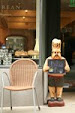
The photo? If you're ever downtown Seattle, by all means visit Belle Epicurean. Your taste buds, body, mind, spirit and soul will appreciate it. Overstated? Maybe, but go there first before you disagree.
September 11 2001
As the title suggests, it's about that day then, when the world we know here in the US changed, for everyone individually and as a nation. You can argue the history of the events before and after, but you can't argue our individual experience that day. It's our own as is our personal view of it and our life because of it.
For me, it started normally. I was a senior technical manager, meaning part of my job was to operate and manage the surface water - meaning rivers and lakes - data(base) for Washington - which is about 95% of all this data collected throughout the State and over the history of data collection. I did all the training and problem solving for users, who input, review, compute and produce the data, and guest accounts, who have read-only access to view all the data. It was one of the coolest jobs I've had helping everyone get their data into, through, computed and produced, to make sure the system worked.
In August I had gone to Denver for a week-long training for the latest major update to the software and database. And now in preparation to the installation locally, I had to conduct four training sessions for users on the new tools and proceedures. This session was the first in our Tacoma Office, and I had worked with the IT folks to get all the computers setup in the training room. I had all the handouts ready and at 8:30 am was simply waiting for everyone to arrive from the distant offices.
Then someone from IT came in to say I should watch the TV. We only had one TV in the office, in the conference room (stupid federal regulations about people not watching television at work). We all watched as the news told the story, replayed the footage of the airplanes crashing into the towers, and the live coverage of the towers. We watched them fall.
Over the next hour or so, the word came down to close all the federal offices and all employees go home. We did, and I went home to turn on the TV and watch as the story unfolded on the small screen. There wasn't anything to say, just listen and watch. I guess I was more struck by the buildings falling than the planes flying into them. It was slowly clear it was an act of terrorism, but why and how did the buildings fall, I kept asking myself. I didn't make sense.
And terrorism does? No, I've watched the news over the years of terorists hitting US and well as other nations targets, whether it's failed attempt in New York City, military barracks, US Embassies or US Navy warships. I knew this was done by terrorists wanting to send a message to the world. Not just to America, but the world. While many Americans died in the towers and in the rescue, many were also from other nations. It was after all, the World Trade Center.
It seemed they had succeeded in their greatest act to date. I remember the announcement grounded all US flights. That night and the next few nights, I sat on the deck to see the darkness of the skies without airplances. While it was enjoyable it felt strange. Something had silenced this nation. And while everyone remembers that day, it was the years afterward that would see the effects to each of us personally and nationally.
I won't put 9/11 in those momentus points in history, or just yet anyway, because I don't think it changed the face of this nation as some past events have been extraordinary events. I am troubled with the direction this nation is going from 9/11. I think we're losing our civil rights and liberties in the name of fear for something that has always been in the world's and our nation's history. 9/11 was only a bigger event than the rest.
I don't know if my memory of 9/11 will fade. Sometimes I hope it will. I want and think we should keep 9/11 in perspective and find a realistic and pragmatic way of living in the world after it.
For me, it started normally. I was a senior technical manager, meaning part of my job was to operate and manage the surface water - meaning rivers and lakes - data(base) for Washington - which is about 95% of all this data collected throughout the State and over the history of data collection. I did all the training and problem solving for users, who input, review, compute and produce the data, and guest accounts, who have read-only access to view all the data. It was one of the coolest jobs I've had helping everyone get their data into, through, computed and produced, to make sure the system worked.
In August I had gone to Denver for a week-long training for the latest major update to the software and database. And now in preparation to the installation locally, I had to conduct four training sessions for users on the new tools and proceedures. This session was the first in our Tacoma Office, and I had worked with the IT folks to get all the computers setup in the training room. I had all the handouts ready and at 8:30 am was simply waiting for everyone to arrive from the distant offices.
Then someone from IT came in to say I should watch the TV. We only had one TV in the office, in the conference room (stupid federal regulations about people not watching television at work). We all watched as the news told the story, replayed the footage of the airplanes crashing into the towers, and the live coverage of the towers. We watched them fall.
Over the next hour or so, the word came down to close all the federal offices and all employees go home. We did, and I went home to turn on the TV and watch as the story unfolded on the small screen. There wasn't anything to say, just listen and watch. I guess I was more struck by the buildings falling than the planes flying into them. It was slowly clear it was an act of terrorism, but why and how did the buildings fall, I kept asking myself. I didn't make sense.
And terrorism does? No, I've watched the news over the years of terorists hitting US and well as other nations targets, whether it's failed attempt in New York City, military barracks, US Embassies or US Navy warships. I knew this was done by terrorists wanting to send a message to the world. Not just to America, but the world. While many Americans died in the towers and in the rescue, many were also from other nations. It was after all, the World Trade Center.
It seemed they had succeeded in their greatest act to date. I remember the announcement grounded all US flights. That night and the next few nights, I sat on the deck to see the darkness of the skies without airplances. While it was enjoyable it felt strange. Something had silenced this nation. And while everyone remembers that day, it was the years afterward that would see the effects to each of us personally and nationally.
I won't put 9/11 in those momentus points in history, or just yet anyway, because I don't think it changed the face of this nation as some past events have been extraordinary events. I am troubled with the direction this nation is going from 9/11. I think we're losing our civil rights and liberties in the name of fear for something that has always been in the world's and our nation's history. 9/11 was only a bigger event than the rest.
I don't know if my memory of 9/11 will fade. Sometimes I hope it will. I want and think we should keep 9/11 in perspective and find a realistic and pragmatic way of living in the world after it.
Subscribe to:
Posts (Atom)